







The nonprofit fundraising software market is projected to reach $6.74 billion by 2030, but a larger market does not make the buying decision easier. For development leaders, the real question is whether a platform can connect the tools already in place with the donor experiences and measurable relationships needed for sustainable growth.
Schedule a demo to see how GoodUnited helps nonprofits convert social audiences into named donors.
Fundraising software for nonprofits should do more than process donations. The right platform brings together donor data, campaign execution, peer-to-peer activity, automated communication. And performance insights so your team can turn engagement into revenue without adding unnecessary operational burden.
That standard changes how you compare vendors. Instead of starting with a feature checklist, begin by understanding the work the software must perform across your fundraising operation, from first interaction through retention and future giving.
What Does Fundraising Software for Nonprofits Actually Do?
Fundraising software for nonprofits serves as the operating layer that connects campaign execution. Donor information, communications, and performance data into a single system rather than a simple donation form.
Fundraising software is not simply a donation form with a payment processor attached. It is the operating layer that connects fundraising activity, donor information, communications, and performance data. At its broadest, the category includes digital tools that help nonprofits earn and process revenue, from online donations to recurring giving and campaign-based fundraising. Technology is increasingly central to reaching a nonprofit's full fundraising potential, particularly when development teams need to grow revenue without adding equivalent administrative workload.
It creates a usable donor record
A core system captures who gave, what they gave to, when they gave, and how they engaged before and after the transaction. That information may live in a CRM or sync into one, where it can support segmentation, stewardship, renewal, and major-gift strategy. The value is not the database itself. It is the ability to turn disconnected interactions into an intelligible donor relationship, while giving development, marketing, and program teams a shared view of activity.
It moves donations from intent to completion
Donation processing covers the visible transaction, but strong platforms also reduce the friction around it. They support campaign-specific pages, recurring gifts, secure payment workflows, receipts, and the data transfer required for accurate reconciliation. In practice, that means the software should make it easier to act on a fundraising appeal and easier for staff to understand the resulting revenue. The right platform also connects donation activity to the systems a nonprofit already uses. Integration with existing CRM and email tools is therefore a strategic requirement, not a technical afterthought.
It expands participation through peer-to-peer fundraising
Peer-to-peer functionality allows supporters to fundraise within their own networks rather than limiting acquisition to the organization's direct audience. A capable platform supports participant registration, personal fundraising pages, social sharing, progress tracking, and automated reminders. This turns a campaign into a distributed acquisition channel, while preserving the data needed to identify new supporters and nurture them after the event or appeal.
It automates engagement and makes performance visible
Modern systems connect a donation or campaign action to the next appropriate communication. Automated nurture flows can welcome a new donor, prompt a fundraiser, encourage a second gift, or re-engage a lapsed supporter based on behavior. Analytics then show which audiences, messages, channels, and campaigns are producing revenue and retention, rather than leaving teams to rely on surface-level engagement metrics. That matters because digital-first fundraising has become a critical driver of nonprofit success. The strategic test is whether the software turns activity into measurable relationships and better decisions, not merely whether it adds another dashboard to the technology stack.

What Features Matter Most When Choosing Fundraising Software?
The right platform should fit your development team's acquisition, conversion, and retention workflows rather than simply offering the longest feature list.
Evaluate the following areas against your strategy, budget, staff capacity, and technical expertise, because the right mix is different for every nonprofit.
Connected data and flexible donation experiences
Start with integration. Fundraising software should connect with your existing CRM, email platform, and other critical systems rather than create another isolated database. Strong integration gives development leaders a more complete view of donor activity and reduces manual reconciliation. This is especially important when a supporter moves from a social interaction to a donation, event, peer-to-peer campaign, or recurring gift. Existing nonprofit tech-stack integration should be a buying requirement, not an afterthought.
Donation pages should also be customizable enough to reflect campaign messaging, branding, suggested amounts, tribute options, and recurring-gift choices. They must work well on mobile devices, where many supporters first encounter a campaign. Social platform integration extends that experience further by allowing a donor to act without an unnecessary jump between disconnected channels. In some cases, automated donation pages can be delivered directly inside social media direct messages, reducing conversion friction. That message-based approach is particularly relevant for organizations with an active Facebook audience.
Workflows that build relationships, not just transactions
Look for peer-to-peer fundraising workflows that let supporters create, share, and manage campaigns with appropriate organizational oversight. The platform should support campaign communications, participant activity, and donation tracking in one operating view. It should also provide automated nurture sequences, so the next message can reflect what a supporter did rather than relying on a generic batch email. Automated nurture is a core capability of modern nonprofit fundraising software because it helps teams reduce donation friction and build a sustainable supporter pipeline without adding equivalent workload. Audience Matching and retargeting can extend that value by helping organizations reconnect with past donors through relevant campaigns.
Measurement and long-term donor management
An analytics dashboard should connect channel activity to meaningful outcomes, including completed donations, campaign performance, conversion, and retention. Avoid dashboards that report engagement without showing whether engagement produces fundraising relationships. Recurring donor management is equally important. Tools should support recurring programs, payment continuity, donor communications, and visibility into the health of that revenue stream. For a broader view of how these capabilities are changing the sector, review our guide to modern nonprofit fundraising trends.
Ready to see how GoodUnited fits your stack? Book a personalized demo.
How Do the Top Fundraising Platforms Compare?
The right platform depends on whether your priority is donor records, donation processing, peer-to-peer campaigns, or social-first fundraising that turns a Facebook audience into identifiable donor relationships.
The comparison below separates established strengths from the strategic gap many nonprofit teams overlook: what happens before a supporter reaches a donation page.
| Platform | Primary strength | Evidence or notable capability | Social audience differentiation |
|---|---|---|---|
| DonorPerfect | Donor management and development operations | Employee-owned and serving nonprofit teams for more than 40 years. Its site reports that nonprofits raise 25% more funds in their first year with the platform, along with a 90% year-over-year client retention rate. View DonorPerfect's claims. | Built around donor management and communication, rather than automated one-to-one conversations inside social DMs. |
| GoFundMe Pro | Online fundraising and donation campaigns | GoFundMe Pro highlights more than $40 billion raised for good across its fundraising ecosystem. Explore GoFundMe Pro. | Strong for digital donation campaigns, but a donation platform is not the same as an automated social relationship layer. |
| Givebutter | Accessible campaign and peer-to-peer fundraising | A practical option for organizations that want campaign, event, and peer-to-peer tools in one fundraising experience. Evaluate transaction economics and CRM depth against your operating model. | Can support social sharing, but social sharing generally sends supporters to a campaign. It does not, by itself, convert followers into named donors through automated DMs. |
| Mightycause | Low-barrier online fundraising | Offers a free tier, making it relevant for organizations testing online fundraising before committing to a larger software investment. | Useful for launching campaigns, but a free campaign page does not create an automated nurture path from social follower to donor. |
| GoodUnited | Social direct messaging and donor relationship automation | GoodUnited's platform has helped nonprofits raise more than $2 billion from over 84 million donors. It supports Facebook Challenges, peer-to-peer fundraising, automated nurture flows, and donation pages delivered inside social DMs. See GoodUnited's platform context. | The distinct category: converting social followers into named, measurable donor relationships through automated one-to-one messaging at scale. GoodUnited is also a Meta Business Partner. |
For organizations already investing heavily in Facebook engagement, the distinction is material. A campaign link can capture intent from people who click, while DM automation can continue the conversation with supporters who need a prompt, reminder, or relevant next step. GoodUnited's approach is designed to reduce donation friction and build relationships without adding manual workload.
How Does Social Direct Messaging Change the Fundraising Software Equation?
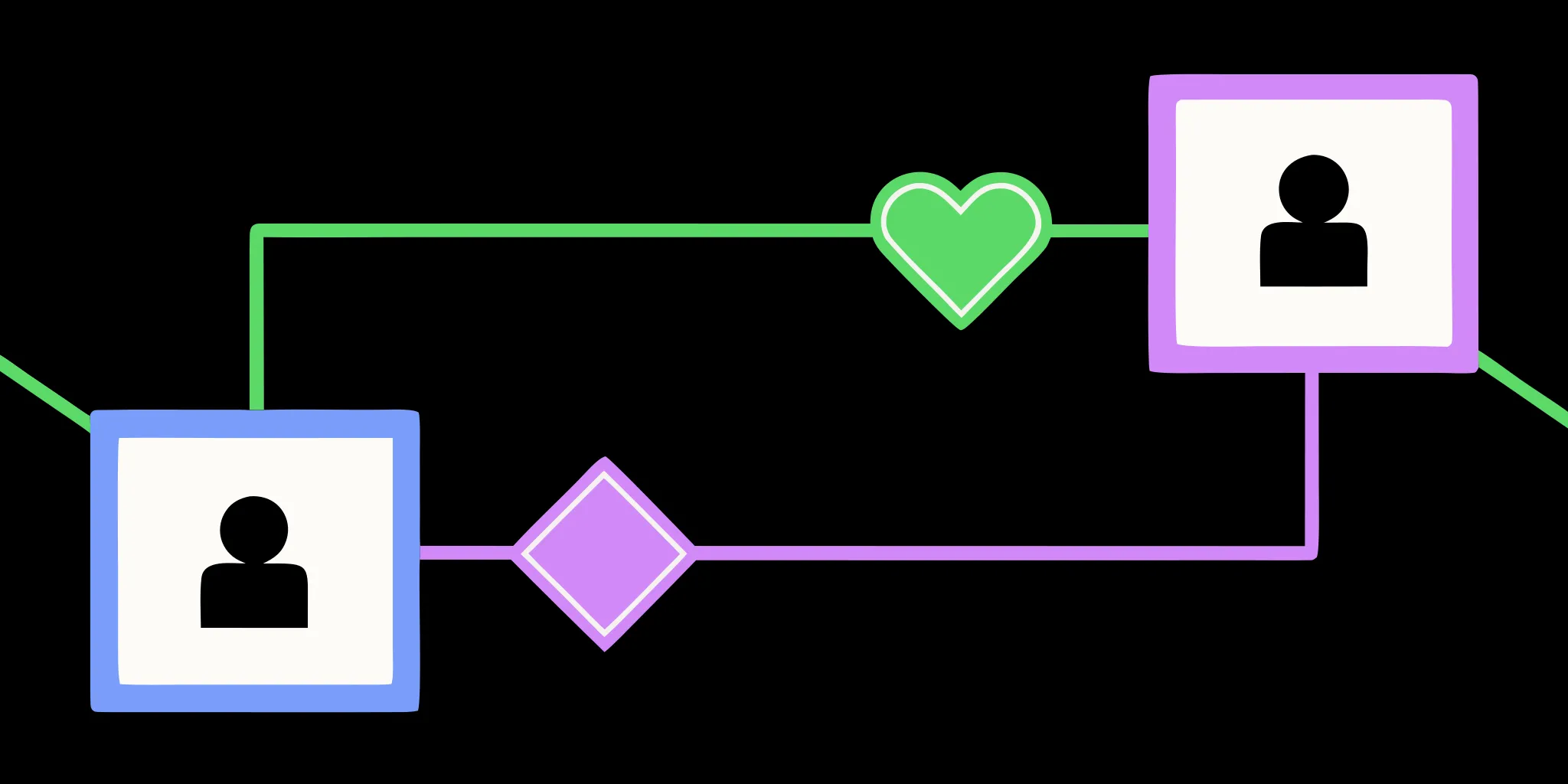
Social direct messaging creates a pathway from an anonymous social follower to a named, engaged donor. Then gives the nonprofit a way to nurture that relationship at scale using automated one-to-one conversations.
Most fundraising software starts after a supporter has already identified themselves. A person visits a donation page, completes a form, or enters a CRM through an event or campaign. Social direct messaging changes the starting point. It creates a pathway from an anonymous social follower to a named, engaged donor, then gives the nonprofit a way to nurture that relationship at scale.
From social reach to a measurable donor pipeline
For organizations with substantial Facebook audiences, the strategic question is not simply how to generate more engagement. It is how to convert existing attention into measurable fundraising relationships. GoodUnited's model uses automated nurture flows to deliver relevant conversations, donation opportunities, and follow-up messages inside social media DMs. Automated donation pages delivered within those conversations reduce the friction between interest and action, while segmentation and analytics help teams understand which audiences and messages produce results.
A complement to the CRM, not a replacement
Traditional CRM and donation-page tools remain important systems of record. They store donor histories, process gifts, support reporting, and help development teams manage long-term stewardship. A social direct messaging platform addresses an earlier stage of the journey: identifying intent among people who may never have visited the nonprofit's website or filled out a form. That makes the social-to-donor pipeline a distinct layer in the fundraising stack, rather than another version of a database or payment page.
The distinction matters operationally. Automated nurturing can reduce donation friction and create a sustainable supporter pipeline without adding workload. One-to-one messaging at scale gives teams a way to build relationships within the platform where supporters already spend time.
Performance and credibility in a new category
GoodUnited reports 80-90% open rates and 40-50% click-through rates for its direct-message donation experiences. Its platform has helped nonprofits raise more than $2 billion from over 84 million donors. These figures illustrate the measurable potential of a social-first acquisition and nurture layer, though results vary by campaign.
GoodUnited is also the only Official Meta Business Partner in the Social Good category, a credential that reinforces its specialization in nonprofit social fundraising. For a development leader evaluating fundraising software for nonprofits, the relevant question is therefore broader than whether a platform can process a gift. It is whether the technology can turn an existing social audience into identifiable, engaged supporters and connect that activity to durable fundraising outcomes.
Talk to our team about converting your Facebook audience into recurring donors.
How Should You Evaluate Fundraising Software for Your Nonprofit?
The right platform depends on your strategy, budget, operational capacity, and technical expertise, not on the longest feature list. Use a structured evaluation so the tool supports stronger donor relationships instead of creating another disconnected system.
- Assess your donor base and social presence. Document your mix of one-time, recurring, major, and peer-to-peer donors, then identify where those supporters already engage. If your nonprofit has an active Facebook audience, prioritize social-native tools that can turn existing attention into measurable fundraising relationships.
- Map your technology stack and integration needs. List your CRM, email platform, payment processor, analytics tools, peer-to-peer solutions, and authentication requirements. Define what data must move between systems, how quickly it must sync, and which team owns data quality. Fundraising software should integrate with the nonprofit tools you already rely on, rather than forcing staff to export spreadsheets or maintain duplicate donor records. Integration guidance from EverTrue is a useful reference point.
- Define the full budget. Compare subscription or tiered pricing, implementation, support, payment processing, transaction fees, upgrades, and any limits on contacts, messages, campaigns, or users. Model costs against your actual fundraising volume and growth plan. A lower monthly price can become expensive if essential automation or reporting sits behind a higher tier.
- Evaluate automation and engagement capabilities. Look beyond donation processing. Test whether the platform supports automated nurture flows, personalized messaging, audience segmentation, recurring giving, and multifaceted campaigns such as Giving Tuesday and annual appeals. Automation should reduce staff workload while preserving one-to-one relationship building at scale.
- Request demos and score each platform against your criteria. Give every vendor the same scenario, such as launching a Giving Tuesday campaign, nurturing a new donor, and reporting on retention. Ask the vendor to show the workflow live, including integrations, permissions, reporting, and staff handoffs. Score the results against your documented priorities, then verify implementation requirements with the people who will use the system daily.
Frequently Asked Questions
What is nonprofit fundraising software?
Nonprofit fundraising software is a set of digital tools that helps an organization plan campaigns, accept donations, manage donor information, support peer-to-peer activity, and measure results. The right platform should connect fundraising activity with the relationships and data your development team already manages, rather than creating another isolated database.
What is the best fundraising software for nonprofits?
There is no universally best platform. The strongest choice is the one that fits your fundraising model. Integrates with your existing CRM and communications stack, and matches your team's capacity to implement and operate it. A nonprofit with a large Facebook audience may prioritize social direct messaging and automated nurture. While another organization may need deeper constituent records, recurring-gift administration, or peer-to-peer campaign tools.
What are the essential features of nonprofit fundraising software?
Start with reliable donation processing, customizable donation experiences, CRM and email integrations, reporting, recurring giving, and clear data ownership. Then evaluate capabilities tied to your growth strategy, such as peer-to-peer workflows, audience segmentation, automated nurture sequences, and social-native conversion paths. Request a realistic demonstration using one of your campaigns, including the handoff from acquisition through donation and follow-up.
How much should a nonprofit spend on fundraising software?
Costs vary widely by platform and scale. Smaller organizations may find workable solutions in free or low-cost tiers, while mid-size and large nonprofits typically budget 1-3% of total funds raised for technology and software. Factor in transaction fees, which typically range from 2-4% per donation, as these can significantly affect net revenue at higher volumes.
Find the Right Fundraising Software for Your Nonprofit
Choosing the right fundraising platform is one of the most consequential decisions a development team can make. The best choice aligns with your donor acquisition model, supports your existing technology stack, and fits the way your team works every day.
Schedule a personalized demo to see how GoodUnited turns social audiences into measurable fundraising relationships. Explore GoodUnited's platform or contact our team to discuss your nonprofit's specific needs.