




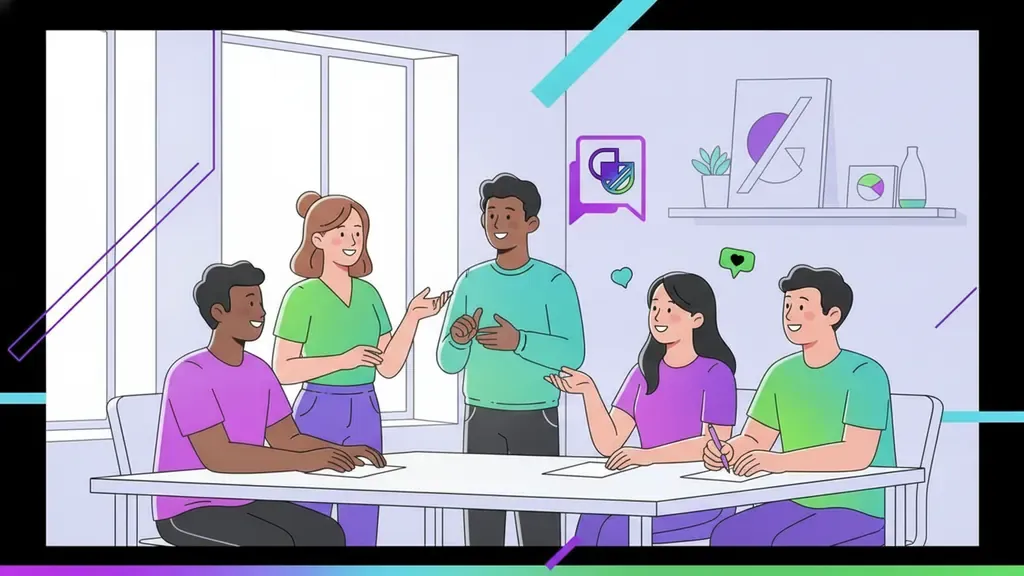






Donor relationships rarely weaken because a nonprofit lacks one more campaign idea. They weaken when acknowledgment, impact reporting, and meaningful follow-up depend on memory instead of an operating rhythm. A year-round plan gives your team a way to stay relevant between appeals, events, and giving moments.
See how GoodUnited can help you build more consistent supporter journeys.
A stewardship calendar maps when each donor segment should receive a thoughtful touchpoint, why that message matters, who owns it, and how the organization will learn from the response. It can coordinate thank-you messages, progress updates, campaign follow-up, and direct-message opportunities across the supporter lifecycle.
The goal is not to fill every week with communication. It is to make each interaction timely, relevant, and connected to the relationship you want to build. That starts with defining stewardship and understanding why deliberate planning supports stronger donor care.
What Is a Stewardship Calendar and Why Does It Matter?
A year-round relationship plan
A stewardship calendar is an operating plan for the communications, recognition, updates, and experiences that keep donors connected after they give. It turns stewardship from an occasional thank-you into a coordinated rhythm. Core activities include thanking and recognizing supporters, reporting on impact, and maintaining regular communication and events. Stewardship guidance identifies each as part of responsible donor care.
For example, a community food bank might schedule a prompt gift acknowledgment, a spring story from a pantry partner, and a fall invitation to see its programs. A youth arts nonprofit could pair a first-time donor thank-you with a student performance update, then invite that donor to a studio event. The exact dates will vary. The discipline is planning the next useful relationship touchpoint before the current one is forgotten.
How is it different from a fundraising campaign calendar?
A fundraising campaign calendar organizes revenue moments: an annual appeal, Giving Tuesday, a peer-to-peer event, or a year-end drive. A stewardship calendar includes those moments but also covers the quieter periods between them. It asks what a donor should hear when no appeal is active, including how a gift was used and what changed because of it.
That distinction protects the relationship from becoming purely transactional. Donors want timely acknowledgment and want to understand both how their gift was used and what impact it had. Stewardship best-practice guidance highlights these expectations.
Why consistency supports retention
Consistency does not mean sending more messages. It means delivering the right recognition or evidence of impact at an intentional moment, using a channel the donor welcomes. Research on millions of DonorsChoose.org donations found that donors were more likely to return after a positive interaction with the recipient. It also connects timely recognition and detailed impact communication with donor return likelihood. Read the study summary.
A stewardship calendar therefore gives leaders a shared system for honoring commitments, assigning ownership, and spotting gaps before a donor notices them. A stewardship matrix can help map segments against touchpoints, but it is a planning tool, not the calendar itself. The calendar adds timing, context, and accountability.
How Do You Build a Stewardship Calendar Around the Donor Lifecycle?
A useful calendar follows the supporter relationship, not only the fundraising calendar. Start with the moments that require recognition, context, or a clear next step, then assign each touchpoint to a person, channel, and review date. The sequence below keeps stewardship connected to donor experience while remaining workable for a small team.
Start with lifecycle objectives and segments
- Set the objective for each stage. Decide whether the immediate purpose is to acknowledge a gift, explain its use, report impact, invite participation, or deepen an existing relationship. Donor stewardship commonly includes timely recognition and communication about how a gift was used, so make those outcomes explicit in the calendar. Stewardship guidance supports these practices.
- Define practical segments. Separate first-time donors, recurring donors, campaign participants, major or threshold-level donors, and supporters who have not engaged recently. Personal communication can matter at every giving level, but your team can determine which donors receive individual attention based on available capacity. Board members or donors above a chosen threshold may be reasonable starting segments, not universal rules.
- Map the donor journey. Identify the transition from gift or campaign action to acknowledgment, impact update, invitation, and renewal opportunity. This is where you can map the donor journey and identify gaps between a supporter action and the next meaningful interaction.
- Map post-gift and campaign triggers. Include the gift date, campaign completion, recurring-gift milestone, event attendance, volunteer action, and relevant impact update. Acknowledgments should be timely, accurate, tailored, and should not solicit another gift in the same message. Review current IRS written-acknowledgment guidance and Publication 1771 as appropriate; this is an operational reminder, not legal advice.
- Assign owners and channels. Name the person responsible for approval, delivery, and follow-up. Choose email, direct message, mail, phone, an event, or a personal note according to the segment and supporter preference. GoodUnited's automated flows can use actions, events, and milestones as messaging triggers, while its guidance recommends aligning touchpoints with campaign timing, supporter behavior, and segmentation data.
- Schedule review and refinement. Review gift activity bi-weekly or monthly, confirm acknowledgments are moving on time, and refresh templates once or twice a year. At least annually, verify that planned impact stories still reflect organizational priorities and donor intent. Record what changed, who approved it, and which lifecycle stage needs attention next.
What Should a 12-Month Nonprofit Stewardship Calendar Include?
A useful calendar turns stewardship from an occasional thank-you into a managed rhythm of recognition, reporting, listening, and relationship-building. The schedule below is a planning framework, not a universal mandated schedule. Adjust it for your fiscal year, campaign calendar, donor preferences, program cycles, and team capacity.

Start with the donor moments that matter
Use the calendar to connect timely acknowledgments with broader moments of meaning. Gift activity and acknowledgment workflows should be reviewed regularly, and acknowledgments should not wait for a year-end batch. The guidance used for this framework recommends reviewing gift activity bi-weekly or monthly and sending gift acknowledgments at least monthly. Those are useful operating prompts, not substitutes for your organization's service standards.
| Timing | Donor moment or campaign context | Suggested segment | Stewardship touchpoint | Review signal |
|---|---|---|---|---|
| January | Year opening and prior-year reflection | All active donors | Thank donors for the previous year and preview priorities. | Delivery, engagement, and unanswered questions |
| February | Relationship-building between campaigns | First-time and recurring donors | Share a concise impact story tailored to their connection. | Story response and content preferences |
| March | Spring program or community milestone | Program-aligned donors | Invite questions, a virtual briefing, or a behind-the-scenes update. | Attendance, replies, and stated interests |
| April | Quarterly progress review | Major, recurring, and recently lapsed donors | Report progress against priorities and identify follow-up needs. | Gaps in impact reporting and renewal risk |
| May | Volunteer, advocacy, or community engagement | Engaged non-donors and active supporters | Recognize participation without treating every interaction as a solicitation. | Participation and next preferred action |
| June | Midyear planning | Leadership and major-gift portfolios | Offer a personal update on goals, timing, and donor intent. | Open commitments and stewardship gaps |
| July | Summer connection or program story | Low-frequency and digital-first donors | Use a short, channel-appropriate story or direct message. | Reach, replies, and opt-outs |
| August | Fall campaign preparation | Prior campaign participants | Ask what updates supporters want before campaign communications begin. | Preference changes and readiness |
| September | Back-to-program or fall priority moment | Restricted and program-specific donors | Explain how their support connects to current work and priorities. | Accuracy of designation and impact proof |
| October | Year-end relationship preparation | Recent, recurring, and high-potential donors | Confirm recognition plans and resolve missing data before peak season. | Data completeness and contactability |
| November | Year-end campaign or giving season | Segmented campaign audiences | Coordinate campaign messages with gratitude and clear impact context. | Response, fatigue, and channel performance |
| December | Gratitude and year-end close | All donors, with tailored leadership outreach | Thank supporters, share meaningful outcomes, and document follow-up. | Acknowledgment timeliness and next-year actions. |
Use cadence rules without making the calendar rigid
Regular communication and events are recognized stewardship activities, while impact reporting helps donors understand how their gifts were used and what they made possible. Build those elements into the year, but let donor behavior and organizational events change the timing. For example, a food bank might pair a winter impact update with a spring volunteer invitation. A youth-services nonprofit might report summer program outcomes in September, then reserve October for personal updates to recurring donors.
Separate stewardship planning from campaign taxonomy
A general fundraising calendar helps teams see when appeals, events, and giving moments occur. For general fundraising calendar planning, use that broader view alongside this one. This calendar adds the stewardship layer: what happens after a gift, between campaigns, after a program milestone, and before the next ask. For major or endowment donors, include at least one meaningful annual contact. If a fund's planned distribution will not be spent, schedule a timely explanation and clarify how the organization plans to use it next year.
Finally, review the framework once or twice a year. Refresh acknowledgment templates, select newsletter stories for stewardship value, and ensure each story demonstrates impact and organizational priorities. The strongest calendar is not the busiest one. It is the one your team can execute accurately, personally, and consistently.
How Can Nonprofits Personalize Stewardship Without Overcomplicating It?
Personalization does not require a separate plan for every supporter. It requires a useful set of signals and a clear decision about when a person should receive a more individual touch. Start with three to five practical segments: recency of giving or participation, relationship stage, giving or participation behavior, stated interest, and capacity for personal outreach.
Use signals your team can act on
Recency separates a first-time donor from someone who has supported several campaigns. Relationship stage distinguishes a new supporter, an active repeat donor, and a lapsed contact. Behavior can include a gift, a peer-to-peer fundraiser, a challenge registration, or repeated engagement with a specific program. Interest helps determine which impact story is relevant. Capacity keeps the plan realistic: your team can reserve personal attention for a manageable group rather than promising one-to-one outreach at a scale it cannot deliver.
For example, a community health nonprofit might send a new donor a tailored thank-you that explains how the gift supports its current program. It could assign repeat donors who fundraised for that program to a staff follow-up. A youth-services organization might invite challenge participants to hear an update about that initiative. Its development director could personally thank board members and donors above a chosen threshold. Guidance on donor segmentation strategies can help your team turn these signals into usable audiences.
Match the touch to the relationship
Keep the baseline consistent, then vary the detail. Every donor should receive a timely, accurate acknowledgment. A selected group might also receive a handwritten note, a call, or a message from a colleague or program participant. The acknowledgment should be tailored to the individual and explain how the gift will be used, without immediately asking for another gift.
See how GoodUnited can support more personalized donor journeys.
Protect privacy when recognition is public
Never assume that a donor wants public recognition because they engaged publicly. Before tagging, naming, or sharing a donor story, check the person's recorded preferences and obtain the appropriate permission. If that preference is unknown, recognize the contribution without identifying the donor. Social media recognition should respect donor privacy choices, not create a new disclosure risk.
How Can Direct Messages Strengthen Donor Stewardship Throughout the Year?
Use the channel for timely, relevant moments
Direct messages work best as one layer in a broader stewardship mix, not as a replacement for email, mail, calls, events, or personal outreach. Add them to the stewardship calendar when a supporter has taken a meaningful action or needs a timely update.
For example, a nonprofit might send a brief thank-you after a first gift, then share a milestone update when a program reaches an important stage. A fundraiser who creates a peer-to-peer page could receive coaching before an event and encouragement when the campaign needs renewed attention. These messages give the organization a practical way to acknowledge behavior while the moment is still relevant.

Connect stewardship to the supporter lifecycle
GoodUnited's automated flows can use actions, events, and milestones as messaging triggers, supporting custom supporter journeys rather than one generic broadcast. Its pre-built messaging frameworks include donor cultivation, fundraiser coaching, and monthly giving. A nonprofit could therefore plan different message paths for a new donor, an active fundraiser, a monthly donor, and a social follower who has not yet given.
That planning should remain coordinated with the rest of the communications program. A post-gift direct message can reinforce a formal acknowledgment, while a later impact update can point a supporter toward a longer email, newsletter, or event invitation. The message should add context or convenience, not duplicate every other channel.
For a broader look at the operating model, see automated donor messaging and learn more about direct messaging for nonprofits.
Keep the human relationship at the center
Automation can help a small team deliver consistent prompts, but it does not determine what deserves a personal response. A complex question, major gift, sensitive situation, or meaningful program update may belong with a staff member, board representative, or volunteer. GoodUnited's audiences, segmentation, reporting, analytics, and CRM connectivity can help teams coordinate these decisions, while supporter behavior and privacy preferences should guide timing and content.
The goal is a connected year-round experience: timely gratitude after giving, useful coaching during fundraising, credible impact communication, and thoughtful re-engagement when a relationship has gone quiet. Direct messages make those touchpoints easier to plan, but the nonprofit's judgment gives them meaning.
What Should Your Team Measure and Review Each Quarter?
A stewardship calendar becomes useful when each touchpoint creates a feedback loop. Review whether supporters received the right message, responded in a meaningful way, took a next step, and received a clear account of impact. The goal is not to maximize activity. It is to learn which relationship-building actions deserve more attention.
1. Did the experience meet the stewardship standard?
Start with delivery and acknowledgment quality. Check whether gifts triggered the intended acknowledgment, whether messages arrived on schedule, and whether names, gift details, links, and impact language were accurate. Effective acknowledgments should be timely and free of errors, while also explaining how the gift was or will be used. Review the organization's process against current IRS written-acknowledgment guidance.
For example, a food pantry might find that gifts from its spring campaign are acknowledged promptly, but impact updates are delayed until year-end. That is a process gap to fix in the next quarter, not a reason to send more generic messages.
2. What did supporters do, and what should happen next?
Review response and engagement by segment and channel. Look for replies, content interactions, event registrations, fundraising-page activity, recurring-giving interest, and other actions that show a supporter is paying attention. Do not treat social engagement as the outcome by itself. Use it to identify people who may be ready for a more relevant donor conversation.
A youth mentoring nonprofit, for instance, could compare supporters who received a student-impact story with those who received a general newsletter. The team can then decide whether the next touchpoint should be a personal note, an invitation, an impact update, or a pause in solicitations. GoodUnited's automated flows can use actions, events, and milestones as messaging triggers, giving teams a practical way to review those next actions alongside other channels.
3. What did you learn, and what will you change?
Close the review with retention signals and qualitative learning. Track whether prior donors return, continue a recurring gift, or remain responsive, but avoid inventing universal targets. Research on DonorsChoose.org donors found that positive interactions, timely recognition, and detailed impact communication were associated with donor return likelihood. Use that finding as a reason to inspect the experience, not as a promised benchmark.
Read replies, survey comments, staff notes, and opt-out reasons for evidence of confusion or appreciation. Document one change to test next quarter, such as a more specific impact story or a trigger-based message after a supporter milestone. A clear donor communication strategy makes the decision visible across fundraising, marketing, and program teams.
Research on first-time blood-donor retention, a different donor context, also points toward more individualized experiences as an area for testing. Treat that finding as a hypothesis for learning, not a nonprofit benchmark. Review the systematic review.
How Can a Small Nonprofit Put This Calendar Into Practice?
Start with one owner and a 30-day setup
Choose one person to own the calendar, even if several colleagues deliver the touchpoints. In week one, inventory recent gifts, thank-you emails, mailed acknowledgments, event follow-ups, and impact updates. Note the audience, owner, channel, timing, and next action for each. This simple audit will reveal both gaps and duplicated outreach.
In week two, set a manageable cadence. Review gift activity monthly, and send acknowledgments at least monthly, while adapting the pace to your team and donor volume. Effective acknowledgments should be timely and accurate, explain how the gift will be used, and avoid asking for another gift. Refresh the core template once or twice a year, then tailor the opening, impact detail, or signatory for meaningful segments.
Use week three to assign segments and handoffs. A small nonprofit might prioritize first-time donors, recurring donors, event participants, and supporters above a chosen giving threshold. Decide how many people can receive personal attention without creating an impossible promise. Colleagues, board members, or program staff can contribute handwritten notes, calls, or short updates, but document who does what and when.
Batch the work, protect privacy, and review capacity
Reserve a recurring block for acknowledgments and a separate block for impact stories. Keep a short checklist for names, gift purpose, personalization, approval, and delivery. Protect donor privacy by recording recognition preferences before tagging anyone publicly or referencing their support in a social channel. The seasonal fundraising appeal can then fit into the same operating plan rather than becoming a last-minute campaign.
In week four, review what the team completed, where handoffs stalled, and which messages generated useful responses. Align future touchpoints with your campaign schedule, supporter behavior, and segmentation data. Direct-message flows can help manage trigger-based moments such as actions, events, and milestones, but they should complement your broader stewardship plan.
Schedule a demo to see how GoodUnited can support a more consistent donor stewardship calendar.
Frequently Asked Questions
What belongs in a nonprofit stewardship calendar?
Include the supporter moments your team intends to recognize, the audience or lifecycle segment involved, the message or experience, the channel, the owner, and the intended measure. Add campaign-related follow-up, thank-you messages, impact updates, renewal prompts, event touchpoints, and opportunities to invite deeper participation. Planning these items together helps prevent stewardship from becoming a series of disconnected reminders.
How often should donors hear from a nonprofit?
There is no universal monthly quota. Set a cadence based on supporter expectations, relationship stage, message relevance, and your team's capacity. A calendar should balance timely acknowledgments with useful updates and meaningful invitations, while protecting donors from repetitive or overlapping appeals. Review response and unsubscribe signals, then adjust the frequency for each audience rather than applying one schedule to everyone.
How should a nonprofit segment its stewardship calendar?
Start with a small number of operationally useful groups, such as first-time donors, recurring donors, lapsed donors, major supporters, peer-to-peer participants, or highly engaged social followers. For each segment, define its next best touchpoint and the trigger that moves a person into or out of that sequence. Add complexity only when the team can maintain accurate data and deliver a genuinely different experience.
Can direct messaging replace email or direct mail?
No. Direct messaging is best treated as an additional channel within a coordinated stewardship plan. Use it when a supporter is already active in a social conversation or when a brief, timely interaction fits the relationship. Email, mail, calls, events, and other channels may remain better suited to longer updates, formal acknowledgments, or supporters who have not opted into social communication. Coordinate timing and preferences across channels to avoid duplication.
Ready to Build More Consistent Donor Relationships?
A year-round stewardship calendar gives your team a clearer way to connect timely supporter touchpoints with thoughtful, personalized journeys. GoodUnited can help you turn those plans into direct-message experiences that complement your broader fundraising communications. Schedule a demo to see how GoodUnited can support your nonprofit's approach.