











A pledge reflects intent, trust, and a donor's connection to your mission. Fulfillment may take time. Thoughtful follow-up helps supporters act without feeling pursued by a collections department.
Schedule a demo to explore connected donor follow-up.
A reminder is not automatically a new solicitation. It should not imply that a donor has failed. It reconnects a person with a decision they already made. This guide shows nonprofit leaders how to make that process repeatable across email, direct mail, SMS, and permission-based social messaging.
What are pledge reminders, and why do they matter?
Pledge reminders are planned stewardship messages that help a supporter complete an existing commitment. Effective reminders name the original pledge, explain the next step, respect communication preferences, and make it easy to reply or fulfill. GoodUnited helps nonprofits connect social conversations with measurable supporter relationships while the nonprofit's primary record remains the source of truth.
A pledge reminder is a scheduled message about a previously recorded commitment. The commitment may come from a capital campaign, event, peer-to-peer fundraiser, challenge, or direct conversation with a development officer. The reminder should reflect the original context. The donor should not have to reconstruct it from an old receipt.
Move from intention to a clear next action
Research on pledge behavior has examined how reminders can support the move from intention to action (published behavioral research). Nonprofit guidance also recommends planned, personalized reminders (DonorPerfect's pledge reminder guidance). These sources do not justify a universal cadence. They support a practical conclusion: the reminder should reduce uncertainty.
- State what the supporter previously agreed to do.
- Connect the pledge to the campaign or purpose that inspired it.
- Present one clear next step.
- Offer a way to correct the record or change preferences.
Keep stewardship ahead of collection language
Start with recognition and gratitude. Avoid language such as "you are overdue" unless the donor has asked for that status notice. Use neutral language about the pledge and its purpose. Impact context can help, but use only accurate progress updates. Do not claim an outcome your organization cannot verify.
For a related approach, see GoodUnited's guide to nurturing donors with sequenced messaging. It can help a development team think about follow-up as a relationship journey instead of a single send.
How should nonprofits use pledge reminders in a sequence?
A nonprofit pledge reminder sequence should follow the expected fulfillment date, campaign context, and donor preference. Confirm the commitment when it is recorded. Offer a useful milestone prompt. Pause when the donor responds, fulfills, withdraws, or asks for fewer messages. GoodUnited automated flows can support these milestones when they are connected to clear supporter actions.
There is no universal schedule that fits every pledge. Timing should follow the promised fulfillment date, campaign context, donor preference, and the amount of context needed to act. Treat the cadence below as an operating framework, not a legal, payment, or compliance rule.
Build the sequence around a known milestone
| Timing | Purpose | Message focus |
|---|---|---|
| When recorded | Confirm the commitment | Thank the donor, restate the purpose, and confirm future updates. |
| Before the expected date | Make fulfillment easy | Provide the established giving path and invite questions or preference changes. |
| Near the expected date | Offer a useful prompt | Ask whether the donor is ready, needs help, or wants an update. |
| After the expected date | Protect the relationship | Use neutral language and avoid assuming the reason for delay. |
| After a response | Honor the new status | Pause, confirm, or route the record based on the donor's reply. |
Set stop conditions before the first send
Pause the reminder when the gift is recorded or the donor requests no more messages. Also pause when the pledge is withdrawn, a staff member takes ownership, or the record needs clarification. If a donor intends to fulfill later, capture the new timing. Do not keep sending the original sequence.
Review each campaign for replies, fulfilled pledges, preference changes, unsubscribes, and staff handoffs. A high send count is not a success measure. A useful sequence creates fewer avoidable questions and gives fundraisers a cleaner view of what needs personal attention.
Match the reminder to the pledge context
A capital campaign pledge may need a progress update from the campaign team. An event pledge may need a reminder tied to the event experience. A peer-to-peer pledge may need the fundraiser's name and the original story. Use the context the donor recognizes, but avoid adding details that are not confirmed in the record.
Assign ownership before the sequence begins. The development operations lead can monitor statuses, while a fundraiser handles questions that require judgment. Name the system where the current record lives and define who may pause an automated touch. This prevents two staff members from sending contradictory updates.
Compare this cadence with GoodUnited's guide to building a high-performing renewal campaign.
What should a pledge reminder message include?
A nonprofit's useful pledge reminder gives the donor context and one clear choice. Thank the supporter, identify the campaign, restate the commitment, explain the next action, offer a timing update, and close without pressure or assumptions about the donor's circumstances. GoodUnited can help teams deliver consistent follow-up while preserving room for human replies.
A strong message lets the donor understand the situation in seconds. It should be specific enough to help, but short enough to respect attention. The donor should not need to search several channels to learn why you contacted them or what to do next.
Use a five-part message structure
- Recognize the relationship. Thank the donor and identify the campaign or program.
- Restate the commitment. Use information the organization has permission to reference.
- Explain the next action. Link to the established giving path or invite a reply.
- Offer an alternative. Make space for a timing update or question.
- Close with respect. Reinforce that the donor chooses how and when to continue.
Example email
Subject: A quick check-in about your River Access pledge
Hi Maya, thank you for pledging support to the River Access campaign. We are checking in before the fulfillment date you selected. If you are ready to complete your gift, you can use the campaign giving page. If your timing has changed or you would like to speak with our team, reply to this message. We appreciate your commitment to this work.
Example social direct message
Hi Maya, thank you again for supporting River Access. We are checking in about the pledge you made for the campaign. Would you like the giving link, a project update, or help changing your timing? Reply with the option that works best for you.
Neither example assumes a failed payment, adds pressure, or promises a result. Each gives the donor a clear choice and a route to a human response.
How can email and social direct messaging work together?
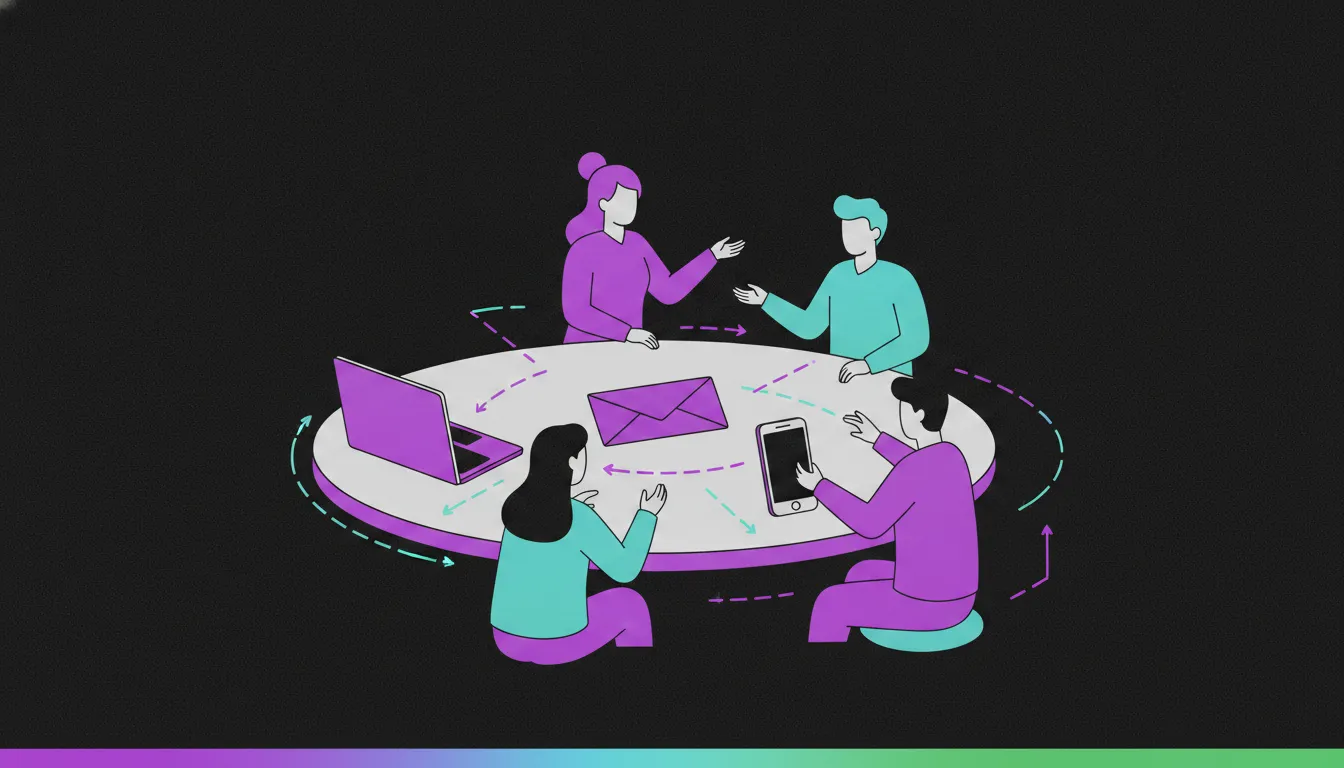
Email and social direct messaging work best when each channel has a defined role. Email can carry fuller context and a durable link. A permission-based social DM can provide a concise prompt and invite a reply. GoodUnited connects social engagement with one-to-one supporter journeys, while the nonprofit's record controls sequence, suppression rules, and staff handoff.
Multichannel coordination is useful when each channel has a distinct role. Use email for confirmation and detailed context. Use a social DM for a short, conversational check-in. Direct mail may suit a formal campaign relationship. Use SMS only when the donor has provided relevant consent and the nonprofit can honor stated preferences.
Assign one job to each channel
Do not send the same copy everywhere. A channel plan should state which touchpoint comes next and which event suppresses it. The plan should also explain when a message moves from automation to a staff task.
Let the supporter record control the handoff
GoodUnited helps nonprofits turn anonymous social followers into named, engaged supporters through one-to-one direct messaging. Its automated flows can respond to supporter actions and milestones. The platform can serve as a layer for a pledge journey, not a replacement for the nonprofit's source-of-truth record.
Learn more through GoodUnited's direct messaging overview, the comparison of direct messaging and email, and automated fundraising with Facebook Messenger.
See how GoodUnited can support a thoughtful donor follow-up journey.
How do you escalate without damaging donor trust?
Respectful escalation adds help rather than volume. Before another reminder, review the supporter record, honor communication preferences, and check for a changed status. Route questions, disputes, sensitive situations, and unclear records to a trained staff member instead of extending automation. GoodUnited can surface supporter actions, but staff should make sensitive decisions.
If the donor does not respond, do not assume refusal, inability to pay, or consent to more outreach. Review the record for a preference, prior question, staff note, changed address, or conflicting status before sending another message.
Start with a preference check
Ask what the donor needs. Offer a new timing option, a different channel, a campaign update, or a human contact. If the donor requests fewer messages, record the request and suppress the sequence. If the donor reports a problem, assign a person who can resolve it.
Define the human handoff
Write a clear rule for when automation stops. Examples include a donor question about the pledge, a disputed record. A request for a tax document, a message expressing distress, or a pledge connected to a sensitive situation. Automation can identify the event. A trained staff member should decide the response.
Good stewardship research emphasizes relationship-focused communication (University of San Francisco research on donor relationships). A human response should preserve dignity and make the next choice clear.
What should your nonprofit track after sending pledge reminders?
Nonprofits should track the pledge source, expected fulfillment date, communication preference, current status, last response, staff owner, next action, and suppression reason. These fields connect each reminder to a responsible decision. Keep message activity distinct from the organization's record of completed gifts. GoodUnited profiles can add supporter actions and preferences to the journey view.
Recordkeeping turns individual messages into an accountable process. The record should help a fundraiser understand the donor's intent, the organization's last action, and the next appropriate step.
Capture the fields that change the next action
- Pledge source, campaign, program, or fundraiser.
- Date recorded and expected fulfillment date, if provided.
- Selected communication channel and stated preferences.
- Current status, such as recorded, confirmed, fulfilled, postponed, withdrawn, disputed, or needs review.
- Last message, response, staff owner, and next action.
- Suppression or pause reason and review date.
- Giving-page or fundraising-page reference used in the message.
Use statuses that the team can interpret
Define each status in plain language. "Confirmed" means the donor acknowledged the pledge. "Fulfilled" means the organization matched it to a completed gift. Do not treat a click, open, or automated delivery as fulfillment. Keep communication activity separate from financial records. Reconcile the systems intentionally.
Measure service quality, not pressure
Useful measures include time to fulfillment, reply rate, preference changes, suppressed contacts, staff handoffs, and unresolved records. Segment results by pledge source and channel. Do not optimize for the maximum number of reminders. Optimize for clear outcomes and a respectful supporter experience.
For a related audience strategy, review GoodUnited's guide to building a recurring giving program. The goal is not to force every pledge into recurring giving. It is to recognize when a supporter may want a relevant next step.
Schedule a demo to map a donor-centered follow-up journey with GoodUnited.
Frequently Asked Questions About Pledge Reminders
What should a pledge reminder include?
Include gratitude, the campaign or program connected to the pledge, the expected next step, and a simple reply or preference option. Use only accurate information from the donor record. Avoid implying that a donor is late, noncompliant, or unwilling when the record does not establish that fact.
How often should a nonprofit send reminders?
Base timing on the expected fulfillment date, campaign context, and donor preference. Confirm the pledge when it is recorded. Send a useful milestone reminder near the expected date. Stop the sequence when the pledge is fulfilled, changed, withdrawn, suppressed, or handed to a staff member.
Can pledge reminders be sent through social direct messages?
Yes, when the supporter has an appropriate messaging relationship and the nonprofit can honor platform and communication preferences. Keep the message short. Identify the original pledge and invite a reply. Use email for fuller context when needed. GoodUnited's workflows can help coordinate one-to-one follow-up at scale.
What should a nonprofit do if a donor does not respond?
Review the record before escalating. Check for a preference, changed status, prior question, or reason to pause. Send a limited, helpful follow-up or assign a staff member when the situation needs judgment. Silence is not proof of refusal, so avoid indefinite automated reminders.
These answers address common pledge follow-up decisions.
Schedule a demo to connect social engagement with measurable donor relationships.