

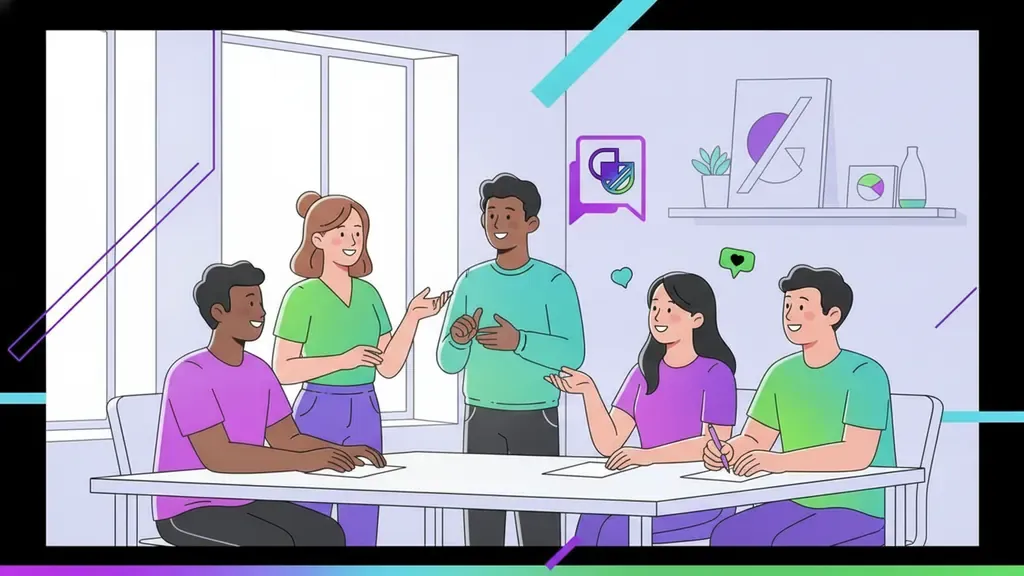









Fundraising burnout is not a sign that a development professional cares too little. It is often the result of caring deeply inside a system that keeps adding urgency, emotional labor, and unplanned work. Nonprofit leaders can protect their teams by treating workload design, role clarity, and supporter journeys as operating priorities.
Schedule a GoodUnited demo to explore a more sustainable supporter journey.
This guide focuses on staff burnout. It is different from donor fatigue, which describes supporters becoming less responsive to repeated appeals. The two problems can interact, but they require different leadership decisions.
What is fundraising burnout, and how is it different from donor fatigue?
Fundraising burnout is a work-related response to chronic, poorly managed stress. It can show up as exhaustion, growing distance from the job, cynicism, and reduced professional efficacy. Donor fatigue is a supporter-side response to fundraising communication. Leaders should diagnose the audience and the operating system separately before choosing an intervention. The World Health Organization defines burnout as an occupational phenomenon, not a medical condition.
Use the right diagnosis before changing the plan
A team member who feels depleted after a year of vacancies may need a workload decision. A supporter who ignores a fifth appeal may need a communication-frequency decision. Treating both as motivation problems creates the wrong fix and places more pressure on staff.
There is also an important ethical boundary. Managers should not diagnose employees or demand personal disclosures. They should create conditions where people can raise concerns, request help, and access qualified support when needed.
| Problem | Who experiences it? | Common signal | Leadership response. |
|---|---|---|---|
| Fundraising burnout. | Fundraising staff. | Exhaustion, cynicism, withdrawal, or falling efficacy. | Redesign workload, clarify ownership, and improve support. |
| Donor fatigue. | Supporters. | Lower response, disengagement, or unsubscribes. | Segment audiences and improve message relevance. |
| Fundraising process friction. | Staff and supporters. | Repeated manual steps, delays, or dropped handoffs. | Document and automate appropriate workflows. |
Which warning signs should nonprofit leaders look for?
Leaders should watch for changes in work patterns, communication, and health-related attendance without turning normal stress into a diagnosis. Warning signs include constant reactivity, missed handoffs, avoidance of donor conversations, lower confidence, and a sudden loss of energy for work that once felt meaningful. Look for patterns over time, not one difficult week. The Chronicle of Philanthropy recommends regular check-ins that address well-being, not only targets.
Workload signals reveal system strain
- Every request is treated as urgent, even when priorities conflict.
- Fundraisers spend most of the week on events, reporting, or data cleanup.
- Donor portfolios grow without a clear service model or capacity review.
- Important follow-ups live in personal inboxes instead of shared workflows.
- People work late to compensate for unclear ownership or staffing gaps.
Behavioral signals reveal declining capacity
- A previously collaborative team member stops raising risks early.
- Messages become unusually short, delayed, or purely transactional.
- One person begins carrying emotional labor for donors and colleagues.
- Small changes produce disproportionate frustration or withdrawal.
- Recognition, learning, and strategic thinking disappear from one-to-ones.

Why does fundraising burnout happen on mission-driven teams?
Mission commitment can hide unhealthy work design. Fundraisers may accept expanding responsibilities because the cause feels more important than their own limits. Burnout grows when leaders combine unclear roles, constant urgency, emotional exposure, and weak recovery systems. The answer is not less commitment. It is a structure that makes commitment sustainable. A 2025 report covered by NonProfit PRO identifies empathy, self-suppression, pressure to do more with less, and organizational isolation as key stress drivers.
Unclear roles turn every gap into a fundraiser's problem
Development teams often absorb event logistics, social content, database cleanup, board reporting, and emergency communications. Some of that work is necessary. The risk appears when nobody decides what the fundraiser should stop doing.
Start with a role map. List the recurring work, the owner, the backup, the deadline, and the definition of done. If a task has no owner, do not quietly assign it to the most reliable person.
Constant urgency destroys strategic capacity
A team can meet every deadline and still become less effective. When the calendar is full of appeals, events, and last-minute requests, there is no protected time for portfolio strategy or relationship planning.
Set a weekly priority rule. Choose the two or three outcomes that matter most, then make lower-value work visible. Leaders should approve tradeoffs instead of asking staff to complete everything at once.
Emotional labor needs a boundary
Fundraisers hear stories of grief, illness, poverty, and urgent need. Those stories can strengthen empathy, but repeated exposure without support can create emotional strain. The person managing a donor relationship still needs permission to step back.
Rotate high-intensity assignments where possible. Give staff a private debrief channel. Make it acceptable to ask for a second person on a difficult call or message thread.
Under-recognition makes meaningful work feel ineffective
Fundraising performance is often discussed through revenue, meetings, and response rates. Those measures matter, but they cannot carry the full meaning of the work. Recognize progress such as better stewardship, cleaner data, stronger handoffs, and a supporter who re-engaged.
Managers can ask two useful questions: Which part of your work is giving you energy? Which part is consuming more capacity than its value justifies?
How can leaders reduce fundraising burnout through better systems?
Reduce burnout by changing the work before asking people to change themselves. Begin with a capacity review, clarify the few outcomes that matter, standardize repeated tasks, and create a regular feedback loop. Then measure whether the new system reduces avoidable effort while preserving the quality of donor relationships. NIOSH guidance places priority on improving working conditions, identifying stressors, intervening, and evaluating results.
1. Measure demand against real capacity
Review the next 90 days of appeals, events, reporting, board requests, and stewardship commitments. Estimate the staff time each workstream requires. Include preparation, coordination, follow-up, and recovery time.
Then label each item as essential, valuable, deferrable, or removable. This exercise is not a productivity contest. It is a leadership decision about what the team can deliver well.
2. Create a single priority and escalation rule
Write down who can change priorities when a new urgent request arrives. A simple rule might say that any new priority requires one existing commitment to move, shrink, or stop.
Publish the rule where the team works. A rule that exists only in a manager's head will not reduce uncertainty.
3. Standardize the work that repeats
Build lightweight templates for campaign briefs, donor follow-up, approval requests, reporting handoffs, and post-campaign reviews. Templates should reduce blank-page work without forcing every supporter into the same message.
GoodUnited's development operations guide is a useful companion for thinking about the systems behind fundraising performance.
4. Review the system with the people doing the work
Run a short monthly review. Ask what created avoidable work, where a handoff failed, and which step should be removed or automated. Assign one owner to each improvement and set a review date.
Do not turn this meeting into another status report. Its purpose is to make the next month easier and more reliable.
Where can automation reduce workload without weakening donor relationships?
Automation helps when it removes repetitive coordination while leaving judgment, empathy, and escalation with people. Start with predictable tasks such as opt-in capture, timely follow-up, audience segmentation, reminders, and reporting. Keep sensitive decisions, unusual requests, and relationship-defining conversations under human review. Automation should create capacity for better fundraising, not create a faster stream of irrelevant appeals.
Choose automation by friction, not by novelty
Map one supporter journey from first interaction to next meaningful action. Mark every step that requires a staff member to copy data, send a routine reminder, check a status, or repeat the same explanation.
Prioritize the steps that are frequent, rules-based, and easy to review. Avoid automating a task simply because it is possible. A bad process can become more difficult to notice when it runs automatically.
Use direct messages to make the next step easier
GoodUnited helps nonprofits turn social followers into named, engaged supporters through direct messaging. A nonprofit can use automated flows to guide a supporter toward a donation page, fundraising page, challenge, or next conversation.
The staff benefit is not that every relationship becomes impersonal. The benefit is that routine next steps can happen consistently, while staff focus on strategy, exceptions, and the supporters who need a human response.
GoodUnited is a Meta Business Partner focused on nonprofit social fundraising. Its direct messaging for nonprofits page explains how the approach works.

How should a nonprofit build a more sustainable supporter journey?
A sustainable supporter journey gives each audience a relevant next step, a reasonable communication pace, and a clear handoff when human help is needed. Connect the journey to fundraising goals, but do not treat every interaction as an immediate ask. The strongest systems balance acquisition, cultivation, participation, giving, and stewardship. Use the campaign pacing framework to make timing and team capacity visible.
Start with audience intent
Separate new followers, past donors, recurring donors, event participants, peer-to-peer fundraisers, and inactive supporters. Their context is different. A first-time follower may need orientation. A past donor may need impact and belonging. A fundraiser may need coaching and recognition.
Segmentation is not a demand for dozens of complicated journeys. Start with the few differences that change the next message or action.
Define the human handoff
Every automated flow needs an escalation rule. Decide which replies require a staff response, how quickly the team should respond, and who owns the handoff. Record the outcome so the next interaction has context.
This protects both sides of the relationship. Supporters receive a timely response, and staff do not have to reconstruct a conversation from scattered tools.
Measure relationship quality and workload
Track meaningful outcomes such as completed donations, fundraiser starts, recurring-giving interest, response quality, and unresolved handoffs. Pair those measures with operational signals such as hours spent, manual touches, and exceptions requiring review.
A system is not sustainable if it improves response volume while increasing staff strain. Review both sides of the equation.
What should a 30-day anti-burnout plan include?
A practical 30-day plan should create relief quickly while building better operating habits. In week one, listen and map demand. In week two, remove or defer low-value work. In week three, standardize one repeated workflow. In week four, review the effect with the team and commit to the next improvement. Small, visible changes build trust when leaders also address structural causes.
- Listen to staff and map the work that consumes capacity.
- Stop, defer, or reassign one low-value commitment.
- Document and test one repeatable fundraising workflow.
- Review workload and supporter outcomes before choosing the next change.
| Timing. | Leadership action. | Evidence to collect. |
|---|---|---|
| Days 1 to 7. | Hold private check-ins and map recurring work. | Top stressors, capacity gaps, and unclear ownership. |
| Days 8 to 14. | Choose stop, start, and continue decisions. | One removed commitment and one protected priority. |
| Days 15 to 21. | Document and test one repeatable workflow. | Fewer manual touches or clearer handoffs. |
| Days 22 to 30. | Review outcomes and set the next experiment. | Staff feedback, supporter quality, and workload signals. |
Talk with GoodUnited about reducing repetitive supporter-workflow tasks.
Frequently Asked Questions About Fundraising Burnout
Is fundraising burnout the same as donor fatigue?
No. Fundraising burnout affects the people doing the work, while donor fatigue affects supporters who may be receiving too many or poorly timed appeals. A nonprofit can have one problem without the other. Review staff capacity and supporter behavior separately, then address the connection between them.
Can automation prevent fundraising burnout?
Automation can reduce repetitive work, but it cannot solve unclear priorities, understaffing, poor management, or unhealthy expectations by itself. Use it for predictable steps with clear review rules. Pair automation with workload decisions, manager check-ins, and human escalation for complex supporter needs.
What should a manager do when a fundraiser is already burned out?
Start with a private, nonjudgmental conversation about workload and immediate support. Remove or reassign commitments where possible. Avoid asking the person to prove their exhaustion. Follow organizational policies and connect them with qualified professional or employee assistance resources when appropriate.
How can nonprofit leaders protect donor relationships while protecting staff?
Set realistic communication priorities, segment supporters by context, and document clear handoffs. Use repeatable workflows for routine follow-up, then reserve staff time for judgment, empathy, and relationship-building. Review supporter experience and team capacity together so efficiency does not become impersonal volume.
What is the next step for a healthier fundraising operation?
Fundraising burnout is a leadership and systems challenge, not a character flaw. Start with one honest capacity review, one priority decision, and one repeated process that can become easier. Then keep listening. Sustainable fundraising gives staff enough clarity and capacity to build the donor relationships the mission depends on.