











An annual giving program is more than a year-end appeal. It is a coordinated system for acquiring, renewing, and stewarding individual donors throughout the year. For nonprofit executives, the goal is dependable relationship growth, not a calendar full of disconnected campaigns.
Schedule a nonprofit strategy session with GoodUnited to explore how social audiences and direct messaging can support your annual giving plan.
What is an annual giving program?
An annual giving program is a year-round fundraising and stewardship system that generates broad-based individual support for a nonprofit's mission and operations. It combines audience development, solicitations, donor service, impact communication, renewal, and measurement across the full organization year.
What can nonprofit annual funds look like in practice?
Nonprofits structure annual funds around their own missions and operating calendars. Nicholas House's Annual Fund emphasizes flexible, immediate support for programs serving families experiencing homelessness. Phillips Brooks School's Annual Fund connects unrestricted support to current operating needs and community participation. These examples show why the program's purpose, audience, and stewardship promise should be explicit before the first appeal.
Stewardship must continue after the gift. Candid's donor stewardship guidance recommends deliberate, ongoing communication beyond a single funding decision. For annual giving leaders, that means building thank-you, impact, feedback, and renewal moments into the operating calendar.
Annual giving is a system, not one annual fund drive
Annual giving often focuses on unrestricted or broadly usable support. That flexibility helps leaders fund programs, staff, and operating needs as priorities change. Blackbaud defines annual giving as year-long fundraising for ongoing operations and programs.
The program can include one-time gifts, recurring gifts, peer-to-peer fundraising, challenge campaigns, and donor upgrades. These tactics serve one larger purpose: building a repeatable pipeline of people who understand the mission and have a clear next step.
How is annual giving different from major and planned giving?
Annual giving develops broad participation and repeatable support. Major giving usually centers on a smaller group of donors and larger asks. Planned giving focuses on future gifts made through estate or financial planning. These programs should coordinate, but they should not share one undifferentiated strategy.
Your annual giving program can identify donors who may later qualify for major or planned giving conversations. It should not turn every annual appeal into a major-gift solicitation. That shift can make ordinary donors feel overlooked or pressured.
Why does an annual giving program need a social-first relationship layer?
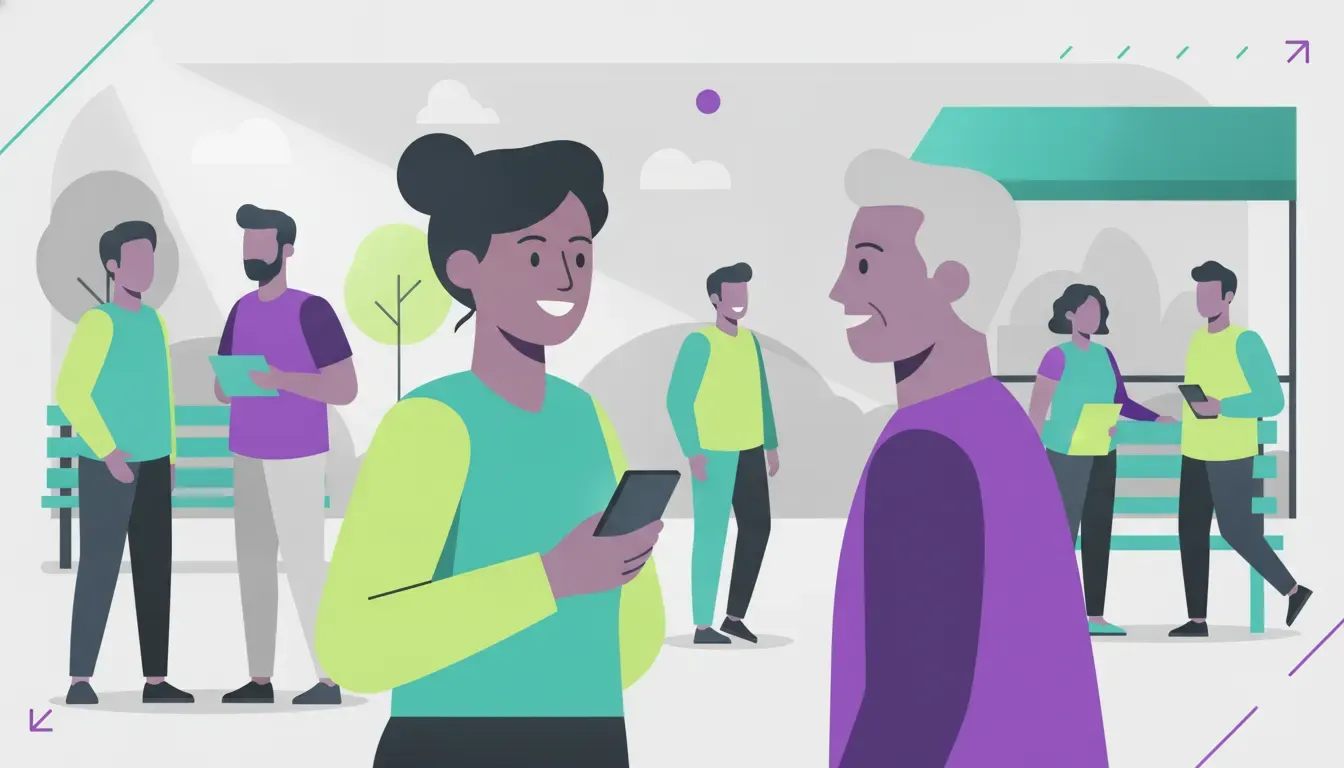
A social-first annual giving program meets supporters in the channels where they already interact with the organization. It uses public content for discovery, permission-based direct messages for relationship building, and a clear donation path for action.
Social reach is not the same as donor relationship
A follower is not automatically a known supporter. A reaction is not a stewardship history. Social activity becomes fundraising infrastructure only when the organization creates a responsible path from attention to consent, identity, conversation, and action.
That path can begin with a mission story, a challenge, a birthday fundraiser, or a response to a supporter question. The next step should be useful and specific. Invite the person to receive an update, learn about an opportunity, or take part in a relevant campaign.
GoodUnited's direct messaging approach is built around turning anonymous social audiences into named, engaged relationships. The strategic value is not simply another broadcast channel. It is a way to create more relevant conversations without asking staff to manually manage every touchpoint.
Where can direct messaging fit without replacing email?
Direct messaging should complement email, direct mail, the website, and personal outreach. Each channel can do a different job:
- Social content: Creates awareness and invites low-friction participation.
- Direct messaging: Delivers timely, personal prompts after a supporter opts in.
- Email: Supports longer updates, receipts, newsletters, and planned communications.
- Direct mail: Reaches audiences who value physical correspondence and may respond to a coordinated ask.
- Website and donation pages: Provide the durable destination for giving, learning, and transparency.
The strongest annual giving programs coordinate these roles. They do not send the same message everywhere and call that multichannel fundraising.
How do you build an annual giving program from the ground up?
Build an annual giving program with five connected moves. Set measurable goals, define priority audiences, map the supporter journey, assign channel roles, and create a year-round operating calendar. Launch one coordinated campaign before expanding the system.
1. Set goals that connect fundraising and relationships
Start with the business questions your leadership team needs answered. Examples include:
- How much unrestricted individual support must the program generate?
- How many first-time donors should enter the file?
- What renewal rate would strengthen the next fiscal year?
- Which audiences need a lower-friction first action?
- How many supporters should move from social engagement into known, permission-based communication?
Limit the first scorecard to five or fewer primary measures. A long list of disconnected metrics can hide weak performance. Pair revenue measures with relationship measures so the team can see whether the program is building future value.
2. Define the audiences before defining the appeals
Do not treat every supporter as an interchangeable contact. Create practical segments based on behavior, relationship stage, and likely next action. A useful starting model includes:
| Audience | Current signal | Useful next action |
|---|---|---|
| New social follower | Engages with mission content | Opt in to a relevant update or conversation |
| First-time donor | Completed an initial gift | Receive a prompt thank-you and impact follow-up |
| Prior donor | Gave in a previous cycle | Hear what changed and receive a timely renewal invitation |
| Peer-to-peer participant | Fundraised or shared a campaign | Receive recognition, impact, and a next participation option |
| Recurring donor | Gives on a continuing schedule | Receive care, impact reporting, and upgrade opportunities only when relevant |
These are working segments, not permanent labels. Update them when behavior changes. The annual giving program should learn from each interaction rather than forcing every person through one fixed sequence.
3. Map the journey from attention to renewal
For each segment, document five decisions:
- What does the supporter already know?
- What is the most useful next message?
- What action can the supporter take with minimal friction?
- What should the organization learn from that action?
- What follow-up demonstrates that the relationship matters?
This exercise turns a campaign calendar into a relationship map. It also reveals where the organization is asking for a gift before it has earned attention or delivered a meaningful update.
What should a nonprofit include in its annual giving calendar?
An annual giving calendar should balance acquisition, cultivation, solicitation, recognition, and renewal. It should give each quarter a clear purpose while leaving room for mission moments, urgent needs, and audience behavior.
A practical four-quarter framework
| Quarter | Program focus | Examples of coordinated activity |
|---|---|---|
| Quarter 1 | Renewal and learning | Thank prior donors, review results, test audience messages, and invite supporters into upcoming opportunities. |
| Quarter 2 | Acquisition and participation | Use social stories, peer-to-peer activity, challenges, and low-friction opt-ins to grow the known audience. |
| Quarter 3 | Cultivation and readiness | Share mission progress, segment audiences, build campaign anticipation, and identify likely advocates. |
| Quarter 4 | Priority appeals and stewardship | Coordinate major asks, year-end participation, matching opportunities, impact proof, and prompt gratitude. |
This framework is intentionally broad. A nonprofit should add its own program milestones, event schedule, fiscal year, and community rhythms. It should also reserve capacity for personal stewardship that automation cannot replace.
Use a message ratio that protects trust
Every program needs asks. It also needs useful non-ask communication. A supporter who hears only donation requests will eventually tune out, regardless of channel.
Plan a mix of impact stories, invitations, educational updates, recognition, feedback requests, and solicitations. The correct ratio depends on the audience and mission. The operating rule is simple: each message should make sense for the person's recent relationship with the organization.
GoodUnited's social-first year-end giving strategy shows how a seasonal campaign can connect to a broader donor pipeline. Treat year-end as one important period inside the annual program, not as the entire strategy.
How can automated stewardship support annual giving?
Automated stewardship supports annual giving by delivering timely acknowledgments, impact updates, reminders, and next steps based on supporter behavior. Good automation makes the relationship more consistent while leaving complex, sensitive, or high-value conversations to people.
Automate the moments that should never be delayed
Useful automated moments can include:
- A welcome message after a new supporter opts in.
- A prompt thank-you after a donation or fundraising action.
- An impact update tied to the campaign the supporter joined.
- A reminder when a supporter begins but does not complete an action.
- A recognition message after a peer-to-peer milestone.
- A renewal invitation based on timing and prior behavior.
Automation should not make the organization sound less human. It should prevent avoidable silence. The content, timing, and exit rules matter more than the label of the technology.
Use direct messages for relevance, not pressure
A direct message should earn its place in the conversation. It can answer a question, confirm a next step, deliver a donation page, or connect an action to mission impact. It should not manufacture urgency or repeatedly ask a person who has shown no relevant intent.
GoodUnited describes automated flows, audience segmentation, donation pages, and analytics as parts of its social direct messaging platform. For an annual giving team, these capabilities can create repeatable journeys while staff retain control over strategy and stewardship decisions.
Read GoodUnited's recurring giving playbook for a narrower application of social-first engagement. An annual giving program should link to that type of specialized journey without duplicating it.
How should leaders measure an annual giving program?
Leaders should measure an annual giving program across acquisition, participation, revenue, retention, and relationship quality. The right dashboard shows both immediate fundraising output and whether the organization is building a healthier pool of future supporters.
Build a balanced scorecard
| Measurement area | Questions to ask | Example measures |
|---|---|---|
| Acquisition | Are new people entering known communication? | New opted-in supporters, first-time donors, acquisition source |
| Participation | Are supporters taking meaningful actions? | Campaign participation, peer-to-peer activity, response rate |
| Revenue | Is the program funding current priorities? | Total individual giving, average gift, recurring revenue |
| Retention | Are relationships continuing? | Renewal rate, second-gift rate, lapsed donor reactivation |
| Stewardship | Do supporters receive relevant follow-up? | Thank-you completion, impact touchpoints, response quality |
Do not treat channel engagement as a substitute for fundraising outcomes. A high reaction count can be useful, but it does not prove donor intent. Compare social signals with permission, identity, action, and subsequent giving behavior.
Review results by segment and journey stage
A blended annual result can conceal major differences. A campaign may attract many new supporters but renew few prior donors. Another may produce modest revenue while creating valuable peer-to-peer relationships.
Review performance by audience, source, message, ask type, and time since the prior action. Then choose one change for the next cycle. Small, documented tests create a better operating system than dramatic annual overhauls.
What mistakes weaken an annual giving program?
The most common annual giving mistakes are treating year-end as the whole strategy. Sending identical appeals to every audience, measuring attention without relationship outcomes, and automating without a stewardship plan.
Five problems to address early
- Campaign isolation: Each appeal starts from zero because the team never maps the full donor journey.
- Audience blindness: New followers, first-time donors, recurring donors, and lapsed donors receive the same message.
- Ask-heavy communication: The program requests gifts without sharing useful progress or recognition.
- Unclear ownership: No leader owns the calendar, audience definitions, data quality, and reporting cadence together.
- Automation without exits: A supporter keeps receiving a sequence after taking the requested action or asking for help.
These are operating problems, not only copy problems. Fix them through governance, clear journey rules, and a regular review meeting that includes development, marketing, social, data, and program leaders.
Protect the boundary between annual and planned giving
Annual giving can identify people who may be ready for a different conversation. It should not make claims about estate planning or future gifts without the right expertise. GoodUnited's planned giving guide covers that distinct program area.
Keeping the boundary clear improves trust. It also helps the team build better handoffs between broad-based fundraising and individualized development work.
Talk with GoodUnited about a social-first annual giving program when you are ready to connect your social audience, direct messaging, and stewardship strategy.
Frequently asked questions about annual giving programs
What is the main goal of an annual giving program?
The main goal is to build a dependable base of individual support through coordinated acquisition, solicitation, stewardship, and renewal. The program should strengthen current fundraising while improving the organization's future donor pipeline.
What is the difference between an annual giving program and an annual campaign?
An annual campaign is a defined fundraising effort with a start and end date. An annual giving program is the larger operating system that coordinates campaigns, donor journeys, stewardship, data, and measurement across the full year.
Can social media support annual giving beyond year-end?
Yes. Social media can support discovery, participation, peer-to-peer fundraising, direct-message opt-ins, impact updates, and timely appeals throughout the year. The organization should connect public social content to permission-based relationship building and a clear next step.
How often should a nonprofit review its annual giving plan?
Review the plan at least quarterly, then conduct a deeper annual review after the fiscal year closes. Quarterly reviews allow the team to adjust audiences, messages, timing, and stewardship before a weak pattern becomes a full-year problem.
Should annual giving include recurring donations?
Recurring donations can be one component of annual giving. They should be offered when the supporter and mission context make the option relevant. The annual giving program should still manage one-time gifts, peer-to-peer participation, renewal, and stewardship.
How can GoodUnited support a social-first annual giving strategy?
GoodUnited helps nonprofits turn social audiences into named, engaged relationships through direct messaging, automated flows, audience segmentation, donation pages, fundraising pages, and analytics. It is a Meta Business Partner and focuses on fundraising inside social conversations.
That approach can support an annual giving program's relationship layer. Your team can define the goals, audiences, calendar, and stewardship standards. GoodUnited can help connect those decisions to repeatable social engagement and fundraising journeys.
Schedule a demo with GoodUnited to discuss how your organization can build more connected, measurable annual giving relationships.